0-0x0-0-0#

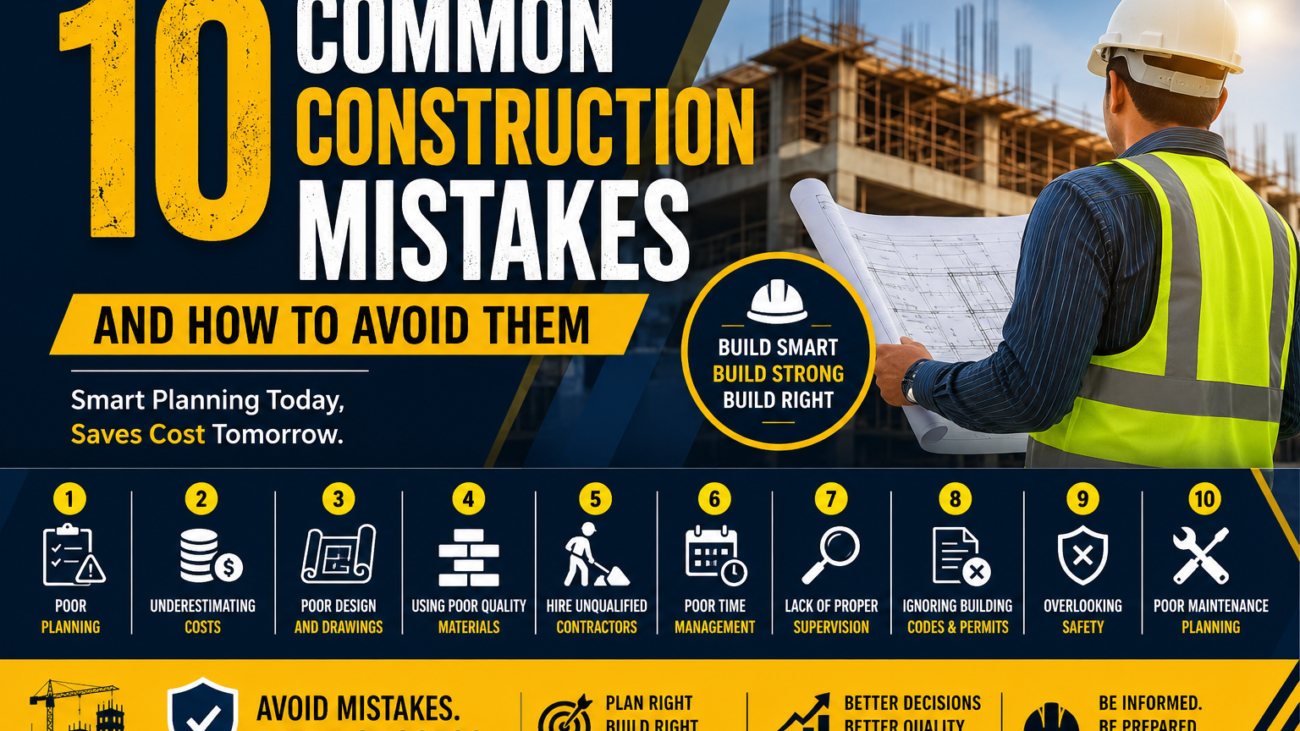
10 Common Construction Mistakes and How to Avoid Them

Construction projects require careful planning, skilled professionals, and effective project management. Unfortunately, many projects experience avoidable setbacks due to common mistakes that lead to delays, increased costs, poor workmanship, and dissatisfied clients.

Whether you’re building a residential home, commercial property, industrial facility, or public infrastructure, understanding these common mistakes can help you make informed decisions and achieve a successful outcome.

At PYMMAK Construction and Engineering Services Limited, we believe that prevention is always better than correction. This guide highlights ten of the most common construction mistakes and explains how to avoid them.


1. Poor Project Planning

Every successful construction project begins with a detailed plan. Without clear objectives, realistic budgets, and accurate schedules, projects can quickly become disorganized.

Common consequences include:

  • Project delays
  • Cost overruns
  • Material shortages
  • Frequent design changes
  • Miscommunication

How to avoid it

  • Develop a detailed project plan.
  • Establish realistic timelines.
  • Identify potential risks early.
  • Define project goals and deliverables.
  • Involve experienced engineers during the planning stage.

2. Choosing the Wrong Contractor

Hiring a contractor based solely on the lowest price is one of the biggest mistakes property owners make.

An inexperienced contractor may lack the technical expertise, equipment, or management skills required for a successful project.

How to avoid it

Choose a contractor with:

  • Proven experience
  • Qualified engineers
  • Positive client testimonials
  • Strong project portfolio
  • Proper licensing
  • Transparent pricing

Investing in a reputable contractor often saves money in the long run.


3. Unrealistic Budgeting

Many construction projects fail because the initial budget does not account for all expected costs.

Hidden expenses may include:

  • Site preparation
  • Utility connections
  • Design revisions
  • Material price fluctuations
  • Equipment hire
  • Permit fees

How to avoid it

Prepare a comprehensive budget that includes:

  • Labor
  • Materials
  • Equipment
  • Professional fees
  • Taxes
  • Contingency funds (typically 10–15%)

A realistic budget reduces financial stress throughout the project.


4. Using Low-Quality Materials

Cheap materials may reduce initial costs but often result in expensive repairs and shorter building lifespans.

Poor-quality materials can lead to:

  • Structural cracks
  • Water leaks
  • Premature deterioration
  • Increased maintenance costs
  • Safety concerns

How to avoid it

Always purchase materials from reputable suppliers and verify that they meet recognized quality standards.

Quality materials improve durability and protect your investment.


5. Ignoring Building Codes and Regulations

Construction projects must comply with national and local building regulations.

Failure to comply can result in:

  • Project shutdowns
  • Legal penalties
  • Expensive redesigns
  • Demolition orders
  • Safety hazards

How to avoid it

Work with qualified professionals who understand local regulations and obtain all required approvals before construction begins.


6. Poor Communication

Construction projects involve multiple stakeholders, including clients, architects, engineers, contractors, suppliers, and government authorities.

Poor communication often leads to:

  • Incorrect construction
  • Delayed decisions
  • Costly rework
  • Project disputes

How to avoid it

Maintain clear communication by:

  • Holding regular project meetings
  • Sharing progress reports
  • Documenting decisions
  • Responding quickly to concerns

Transparent communication helps projects run smoothly.


7. Inadequate Site Supervision

Even the best designs can fail if construction work is not properly supervised.

Without regular inspections, mistakes may go unnoticed until they become expensive to correct.

Effective supervision includes:

  • Daily site inspections
  • Quality control checks
  • Safety monitoring
  • Progress tracking
  • Contractor coordination

Professional supervision ensures that work meets engineering specifications.


8. Neglecting Construction Safety

Safety should never be compromised.

Unsafe construction sites increase the risk of:

  • Worker injuries
  • Equipment damage
  • Project delays
  • Legal liability
  • Financial losses

Best safety practices include:

  • Wearing Personal Protective Equipment (PPE)
  • Conducting safety training
  • Inspecting equipment regularly
  • Maintaining clean work areas
  • Following emergency procedures

A safe construction site is a productive construction site.


9. Frequent Design Changes During Construction

Changing building designs after construction has started is one of the fastest ways to increase costs and delay completion.

Late design changes often require:

  • Demolition
  • Material replacement
  • Schedule adjustments
  • Additional labor
  • Engineering revisions

How to avoid it

Finalize designs before construction begins and carefully review all plans with your project team.

Any necessary changes should be evaluated for cost and schedule impact before approval.


10. Lack of Quality Control

Quality control ensures that every stage of construction meets project specifications.

Without proper quality assurance, buildings may develop defects that require costly repairs.

Quality control should include:

  • Material inspections
  • Structural testing
  • Concrete strength testing
  • Finishing inspections
  • Compliance checks

Consistent quality inspections lead to safer and longer-lasting structures.


Best Practices for Successful Construction Projects

To maximize your project’s success:

  • Define clear project goals.
  • Hire qualified professionals.
  • Develop a realistic budget.
  • Create a detailed construction schedule.
  • Use high-quality materials.
  • Follow building regulations.
  • Monitor progress regularly.
  • Maintain open communication.
  • Prioritize worker safety.
  • Conduct routine quality inspections.

Following these best practices reduces risks and improves project outcomes.


The Value of Professional Project Management

Professional project management helps coordinate every aspect of construction, including planning, budgeting, procurement, scheduling, quality assurance, and stakeholder communication.

Benefits include:

  • Improved efficiency
  • Better cost control
  • Reduced delays
  • Enhanced quality
  • Stronger risk management
  • Increased client satisfaction

An experienced project manager keeps construction activities organized and aligned with project objectives.


Why Choose PYMMAK Construction and Engineering Services Limited?

At PYMMAK Construction and Engineering Services Limited, we understand that successful construction depends on careful planning, technical expertise, and attention to detail.

Our services include:

  • Residential construction
  • Commercial construction
  • Civil engineering works
  • Road construction
  • Structural engineering
  • Renovations and remodeling
  • Project management
  • Site supervision
  • Infrastructure development

Our experienced team is committed to delivering projects that are safe, durable, cost-effective, and completed to the highest professional standards.


Conclusion

Construction mistakes can be costly, but they are often preventable. Proper planning, experienced professionals, quality materials, effective communication, and rigorous quality control are the keys to successful project delivery.

By partnering with a trusted construction company like PYMMAK Construction and Engineering Services Limited, you can avoid common pitfalls and ensure your project is completed on time, within budget, and to exceptional quality standards.

Whether you’re building a home, office, school, warehouse, or infrastructure project, making informed decisions today will protect your investment for years to come.


Frequently Asked Questions (FAQs)

What is the most common mistake in construction?

Poor planning is one of the leading causes of construction delays, budget overruns, and project failures.

How can I avoid construction delays?

Develop a realistic schedule, hire experienced professionals, procure materials early, and monitor progress regularly.

Why is quality control important?

Quality control ensures construction work meets engineering standards, reduces defects, and increases the lifespan of the building.

How much contingency should I include in my construction budget?

Many projects benefit from setting aside approximately 10–15% of the total budget for unexpected costs.

Why should I work with PYMMAK Construction and Engineering Services Limited?

We combine engineering expertise, professional project management, strict quality control, and a commitment to client satisfaction to deliver reliable construction solutions across Uganda.
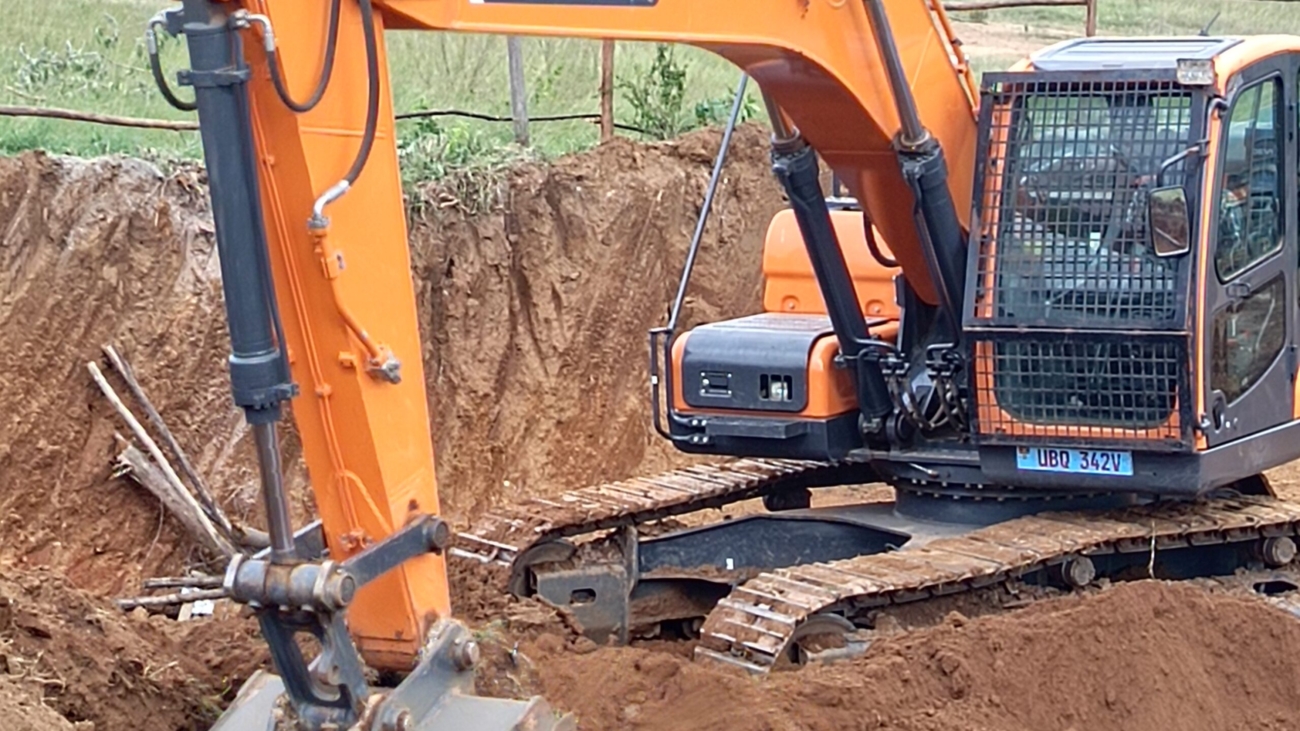

0-0x0-0-0#

How to Choose the Right Construction Company: 15 Factors Every Client Should Consider

Selecting the right construction company is one of the most important decisions you will make when planning a building or infrastructure project. Whether you are constructing a family home, office complex, commercial building, road, or industrial facility, the contractor you hire will significantly influence the quality, cost, and success of the project.

With many construction firms available, knowing how to identify a reliable and experienced contractor can save you time, money, and unnecessary stress.

At PYMMAK Construction and Engineering Services Limited, we believe that informed clients make better decisions. This guide highlights the most important factors to consider when selecting a construction company.


Why Choosing the Right Contractor Matters

A professional construction company provides much more than labor. They offer expertise, project management, engineering knowledge, quality assurance, and regulatory compliance.

Hiring the wrong contractor can lead to:

  • Poor workmanship
  • Budget overruns
  • Missed deadlines
  • Safety issues
  • Legal disputes
  • Structural defects
  • Increased maintenance costs

A qualified contractor minimizes these risks while delivering a durable, high-quality project.


1. Experience in the Construction Industry

Experience is one of the strongest indicators of a contractor’s ability to deliver successful projects.

An experienced construction company has likely encountered a wide range of challenges and developed effective solutions for managing them.

Look for experience in:

  • Residential construction
  • Commercial buildings
  • Industrial facilities
  • Civil engineering
  • Road construction
  • Infrastructure projects
  • Renovation and remodeling

2. Proper Licensing and Registration

Always verify that the construction company is legally registered and authorized to operate.

A licensed contractor demonstrates professionalism and compliance with industry regulations.

Ask for:

  • Company registration documents
  • Construction licenses
  • Tax compliance certificates
  • Business permits

Working with a legitimate company protects your investment.


3. Qualified Engineers and Technical Staff

Construction projects require specialized knowledge.

A reputable company should employ:

  • Civil engineers
  • Structural engineers
  • Quantity surveyors
  • Architects
  • Project managers
  • Site supervisors
  • Skilled technicians

Their expertise ensures the project meets engineering and safety standards.


4. Strong Portfolio of Completed Projects

Reviewing previous work helps you evaluate the company’s capabilities.

Ask to see examples of:

  • Residential homes
  • Office buildings
  • Warehouses
  • Schools
  • Hospitals
  • Roads
  • Bridges
  • Renovation projects

A diverse portfolio demonstrates versatility and technical competence.


5. Positive Client Testimonials

Satisfied clients are a strong sign of reliable service.

Look for feedback regarding:

  • Work quality
  • Communication
  • Professionalism
  • Timely completion
  • Budget management
  • Problem-solving

References from previous clients provide valuable insight into the company’s reputation.


6. Commitment to Safety

Construction sites present numerous hazards.

A professional contractor prioritizes safety by implementing:

  • Worker training
  • Personal protective equipment (PPE)
  • Site safety inspections
  • Emergency response plans
  • Hazard identification
  • Equipment maintenance

A safe project is more productive and less likely to experience costly disruptions.


7. Transparent Pricing

Reliable construction companies provide detailed quotations that clearly explain project costs.

A professional estimate should include:

  • Labor
  • Materials
  • Equipment
  • Site preparation
  • Permits
  • Project management
  • Contingency costs

Avoid contractors who offer unrealistically low prices without proper documentation.


8. Effective Communication

Construction projects involve constant coordination between clients, engineers, suppliers, and subcontractors.

Choose a company that:

  • Responds promptly
  • Provides regular updates
  • Explains technical information clearly
  • Addresses concerns professionally
  • Maintains open communication throughout the project

Good communication builds trust and reduces misunderstandings.


9. Quality Building Materials

The durability of any structure depends heavily on the quality of materials used.

Professional contractors source materials from trusted suppliers and ensure they meet required standards.

Common materials include:

  • Cement
  • Steel reinforcement
  • Concrete
  • Roofing materials
  • Electrical components
  • Plumbing fixtures
  • Finishing materials

High-quality materials reduce future repair and maintenance costs.


10. Modern Construction Equipment

Advanced equipment improves efficiency and project quality.

Leading construction companies invest in:

  • Excavators
  • Concrete mixers
  • Cranes
  • Surveying equipment
  • Compactors
  • GPS-guided machinery
  • Digital measuring tools

Modern equipment allows projects to be completed more safely and efficiently.


11. Project Management Expertise

Successful construction depends on effective planning and coordination.

Professional project managers oversee:

  • Scheduling
  • Budget control
  • Resource allocation
  • Procurement
  • Quality assurance
  • Risk management
  • Client communication

Strong project management helps keep projects on time and within budget.


12. Environmental Responsibility

Today’s construction industry increasingly emphasizes sustainable building practices.

Environmentally responsible contractors:

  • Reduce waste
  • Recycle materials
  • Minimize pollution
  • Use energy-efficient designs
  • Protect natural resources
  • Comply with environmental regulations

Sustainable construction benefits both clients and communities.


13. Warranty and After-Sales Support

A reputable contractor stands behind their work.

Ask whether the company provides warranties covering:

  • Structural integrity
  • Workmanship
  • Materials
  • Defect correction

After-project support demonstrates confidence in the quality of construction.


14. Ability to Meet Deadlines

Time is a valuable resource in construction.

An experienced contractor develops realistic schedules and monitors progress to ensure timely completion.

Reliable companies:

  • Plan efficiently
  • Coordinate suppliers
  • Monitor milestones
  • Manage risks proactively

Delivering projects on schedule minimizes additional costs.


15. Commitment to Customer Satisfaction

The best construction companies build lasting relationships, not just buildings.

Signs of excellent customer service include:

  • Professional conduct
  • Honest advice
  • Transparency
  • Flexible problem-solving
  • Attention to detail
  • Commitment to quality

A customer-focused company works to exceed expectations at every stage of the project.


Questions to Ask Before Hiring a Construction Company

Before signing a contract, consider asking:

  • How many years have you been in business?
  • Can you provide references?
  • Who will supervise my project?
  • How do you manage project timelines?
  • What quality control measures do you use?
  • How do you handle unexpected changes?
  • What safety procedures are in place?
  • Do you offer warranties?

These questions help you make an informed decision.


Why Choose PYMMAK Construction and Engineering Services Limited?

At PYMMAK Construction and Engineering Services Limited, we are committed to delivering exceptional construction and engineering solutions across Uganda.

Our core strengths include:

  • Experienced engineers and technical professionals
  • High-quality workmanship
  • Transparent project management
  • Strict adherence to safety standards
  • Reliable scheduling and cost control
  • Modern construction equipment
  • Sustainable construction practices
  • Personalized client service

Whether your project is residential, commercial, or infrastructure-related, we have the expertise to deliver results that exceed expectations.


Conclusion

Choosing the right construction company is one of the most important investments in the success of your project. By evaluating experience, qualifications, safety practices, communication, quality standards, and customer service, you can confidently select a contractor who will bring your vision to life.

At PYMMAK Construction and Engineering Services Limited, we combine engineering excellence, innovative solutions, and a commitment to quality to deliver projects that stand the test of time.

If you’re planning your next construction project, partner with a team dedicated to building with integrity, precision, and professionalism.


Frequently Asked Questions (FAQs)

How do I know if a construction company is trustworthy?

Check their experience, licenses, client reviews, completed projects, and ability to provide detailed project proposals and references.

Why shouldn’t I choose the cheapest contractor?

The lowest price may result in poor-quality materials, inexperienced workers, delays, or costly repairs in the future.

What documents should I request before hiring a contractor?

Request company registration documents, licenses, insurance details, project references, and a detailed quotation.

How important is project management?

Effective project management helps control costs, coordinate activities, manage risks, and ensure the project is completed on time.

Why should I choose PYMMAK Construction and Engineering Services Limited?

Our experienced team, commitment to quality, modern construction methods, transparent communication, and customer-focused approach make us a trusted partner for construction and engineering projects across Uganda.

d87d72679d6e446f8aa2a59cd27d8b65

Top 10 Construction Trends Shaping the Industry in 2026

The construction industry is evolving faster than ever. Advances in technology, sustainability initiatives, and changing client expectations are reshaping how buildings and infrastructure are designed, constructed, and maintained. Companies that embrace these innovations are better positioned to deliver safer, more efficient, and higher-quality projects.

At PYMMAK Construction and Engineering Services Limited, we continuously adopt modern construction practices to provide innovative, cost-effective, and durable solutions for our clients. Here are the top 10 trends driving the future of construction.

1. Sustainable and Green Construction

Sustainability is no longer optional—it is becoming a standard expectation. Clients, governments, and investors increasingly prioritize environmentally responsible construction practices.

Green construction focuses on:

  • Energy-efficient building designs
  • Environmentally friendly building materials
  • Solar power integration
  • Rainwater harvesting systems
  • Natural lighting and ventilation
  • Waste reduction and recycling
  • Water-efficient plumbing systems

Sustainable buildings reduce operational costs while contributing to environmental conservation.

2. Building Information Modeling (BIM)

Building Information Modeling (BIM) has transformed the planning and execution of construction projects.

Instead of relying solely on 2D drawings, BIM creates detailed 3D digital models that integrate architectural, structural, electrical, and mechanical designs into a single collaborative platform.

Benefits of BIM include:

  • Improved design accuracy
  • Better collaboration between project teams
  • Early detection of design conflicts
  • Reduced project delays
  • More accurate cost estimation
  • Enhanced project visualization

BIM improves decision-making throughout the project lifecycle.

3. Smart Buildings

Modern buildings are becoming increasingly intelligent through the integration of advanced technologies.

Smart buildings utilize systems such as:

  • Automated lighting
  • Smart HVAC controls
  • Intelligent security systems
  • Energy monitoring
  • Occupancy sensors
  • Remote building management

These technologies enhance comfort, improve security, and reduce energy consumption.

4. Artificial Intelligence (AI) in Construction

Artificial Intelligence is streamlining project planning and execution.

AI-powered solutions can:

  • Predict project risks
  • Optimize construction schedules
  • Analyze project data
  • Improve resource allocation
  • Monitor equipment performance
  • Enhance quality control

As AI continues to evolve, construction companies can make faster, more informed decisions.

5. Drone Technology

Drones have become valuable tools for construction professionals.

They are commonly used for:

  • Site surveys
  • Progress monitoring
  • Aerial photography
  • Topographical mapping
  • Safety inspections
  • Earthwork calculations

Drone technology saves time, improves accuracy, and reduces the need for manual inspections in hazardous areas.

6. Modular and Prefabricated Construction

Prefabrication involves manufacturing building components in controlled factory environments before transporting them to the construction site for assembly.

Advantages include:

  • Faster project completion
  • Reduced material waste
  • Improved quality control
  • Lower labor costs
  • Greater construction precision
  • Reduced weather-related delays

Modular construction is increasingly popular for residential, commercial, healthcare, and educational buildings.

7. Digital Project Management

Construction companies are moving away from paper-based processes and adopting digital management systems.

Modern project management platforms help teams:

  • Track project progress
  • Manage budgets
  • Coordinate subcontractors
  • Schedule activities
  • Store project documents
  • Improve communication
  • Generate reports in real time

Digital tools improve transparency and efficiency across every phase of construction.

8. Improved Construction Safety

Worker safety remains a top priority across the industry.

Construction companies are investing in:

  • Advanced personal protective equipment (PPE)
  • Wearable safety devices
  • Safety management software
  • Real-time hazard monitoring
  • Digital safety training
  • Automated incident reporting

A proactive safety culture reduces accidents and improves productivity.

9. Advanced Construction Equipment

Construction machinery continues to become more efficient and technologically advanced.

Examples include:

  • GPS-guided excavators
  • Automated grading equipment
  • Fuel-efficient machinery
  • Electric construction equipment
  • Remote-controlled machines
  • Smart maintenance systems

Modern equipment increases productivity while reducing operational costs.

10. Skilled Workforce Development

As technology advances, construction professionals require new skills to remain competitive.

Leading companies invest in:

  • Technical training
  • Safety certification
  • Digital construction tools
  • Leadership development
  • Engineering education
  • Equipment operation training

Continuous learning ensures construction teams can successfully deliver increasingly complex projects.

How These Trends Benefit Clients

Modern construction practices offer significant advantages to clients, including:

  • Faster project delivery
  • Improved quality
  • Lower long-term maintenance costs
  • Enhanced energy efficiency
  • Better safety standards
  • Greater project transparency
  • More accurate budgeting
  • Reduced environmental impact

By embracing innovation, construction companies provide greater value and long-lasting results.

The Future of Construction

The future of construction will be driven by technology, sustainability, and collaboration. Innovations such as robotics, artificial intelligence, digital twins, 3D printing, and advanced materials will continue transforming how projects are delivered.

Companies that invest in these technologies today will be better prepared to meet tomorrow’s challenges and client expectations.

Why Choose PYMMAK Construction and Engineering Services Limited?

At PYMMAK Construction and Engineering Services Limited, we combine engineering expertise with modern construction methods to deliver projects that are efficient, durable, and cost-effective.

Our services include:

  • Residential construction
  • Commercial construction
  • Civil engineering works
  • Road construction
  • Infrastructure development
  • Building renovations
  • Project management
  • Structural engineering
  • Site supervision

We are committed to delivering innovative solutions that meet the highest standards of quality, safety, and sustainability.

Conclusion

The construction industry is experiencing an exciting transformation. From sustainable building practices and smart technologies to AI-driven project management and modular construction, these trends are improving efficiency, reducing costs, and enhancing project outcomes.

Whether you’re planning a new home, commercial development, or infrastructure project, partnering with a forward-thinking construction company ensures your investment benefits from the latest industry innovations.

With a focus on quality, innovation, and client satisfaction, PYMMAK Construction and Engineering Services Limited is ready to help bring your construction vision to life.


Frequently Asked Questions (FAQs)

What is the biggest trend in construction today?

Sustainable construction and digital technologies such as Building Information Modeling (BIM) are among the most influential trends shaping the industry.

How does BIM improve construction projects?

BIM enhances collaboration, reduces design errors, improves cost estimation, and helps teams identify issues before construction begins.

Why is sustainability important in construction?

Sustainable construction reduces environmental impact, lowers operating costs, and creates healthier, more energy-efficient buildings.

Are drones commonly used in construction?

Yes. Drones are widely used for site surveys, inspections, progress monitoring, and project documentation.

How can modern construction technology reduce project costs?

Technology improves planning, reduces material waste, minimizes errors, enhances productivity, and helps complete projects more efficiently, leading to lower overall costs.

new22

The Ultimate Guide to Planning a Construction Project

Construction projects, whether residential, commercial, or industrial, require careful planning to ensure they are completed on time, within budget, and to the highest quality standards. Proper planning reduces risks, minimizes delays, improves communication, and helps deliver successful outcomes.

At PYMMAK Construction and Engineering Services Limited, we understand that every successful project begins with a solid plan. This guide outlines the essential steps involved in planning a construction project that meets your goals while maintaining safety, efficiency, and quality.

Why Construction Planning Matters

Planning serves as the foundation of every construction project. Without a clear strategy, projects often experience:

  • Budget overruns
  • Schedule delays
  • Poor workmanship
  • Material shortages
  • Safety incidents
  • Communication breakdowns

Effective planning allows stakeholders to anticipate challenges before they become costly problems.

Step 1: Define Project Objectives

Every project starts with a clear understanding of its purpose.

Ask questions such as:

  • What is the project intended to achieve?
  • Who will use the building?
  • What are the long-term goals?
  • What quality standards are required?

Clearly defining objectives ensures everyone works toward the same vision.

Step 2: Conduct a Site Assessment

Before construction begins, engineers and surveyors evaluate the site.

Important considerations include:

  • Soil conditions
  • Drainage
  • Accessibility
  • Existing infrastructure
  • Environmental factors
  • Utility connections
  • Topography

A thorough site assessment identifies potential risks and influences the project’s design and construction methods.

Step 3: Establish a Realistic Budget

Budgeting involves much more than estimating material costs.

A comprehensive construction budget includes:

  • Land preparation
  • Design and architectural fees
  • Engineering services
  • Building permits
  • Materials
  • Equipment
  • Labor
  • Utilities
  • Transportation
  • Contingency funds
  • Finishing works

Including a contingency reserve helps cover unforeseen expenses without disrupting progress.

Step 4: Develop Detailed Designs

Architects and engineers transform ideas into detailed construction drawings.

These typically include:

  • Architectural plans
  • Structural drawings
  • Electrical layouts
  • Plumbing systems
  • Mechanical designs
  • Landscape plans

Accurate drawings reduce construction errors and improve coordination among contractors.

Step 5: Obtain Necessary Approvals

Construction projects must comply with local regulations and building codes.

Depending on the project, approvals may include:

  • Building permits
  • Environmental approvals
  • Utility approvals
  • Fire safety certifications
  • Occupational safety compliance

Obtaining approvals early helps avoid costly delays later.

Step 6: Select the Right Construction Team

Choosing experienced professionals significantly impacts project success.

Look for a contractor with:

  • Proven experience
  • Qualified engineers
  • Skilled workforce
  • Modern equipment
  • Strong safety record
  • Transparent communication
  • Positive client references

An experienced contractor delivers quality workmanship while minimizing project risks.

Step 7: Create a Project Schedule

A construction schedule outlines:

  • Major milestones
  • Procurement timelines
  • Foundation work
  • Structural construction
  • Roofing
  • Mechanical installations
  • Electrical works
  • Interior finishing
  • Final inspections

Project management software is often used to monitor progress and identify delays early.

Step 8: Procure Quality Materials

Using high-quality construction materials improves durability and reduces long-term maintenance costs.

Factors to consider include:

  • Supplier reputation
  • Product certifications
  • Delivery timelines
  • Material availability
  • Cost-effectiveness
  • Sustainability

Reliable suppliers help maintain project schedules.

Step 9: Prioritize Safety

Construction sites involve numerous hazards.

An effective safety program includes:

  • Personal protective equipment (PPE)
  • Worker training
  • Daily toolbox talks
  • Emergency procedures
  • Equipment inspections
  • Safe lifting practices
  • Hazard identification

A strong safety culture protects workers and reduces costly accidents.

Step 10: Monitor Progress

Regular inspections help ensure work meets specifications.

Project managers should monitor:

  • Budget performance
  • Schedule adherence
  • Quality standards
  • Safety compliance
  • Material usage
  • Client satisfaction

Frequent reporting keeps stakeholders informed and supports timely decision-making.

Common Construction Planning Mistakes

Many projects fail due to avoidable planning errors, such as:

  • Inadequate budgeting
  • Poor communication
  • Unrealistic deadlines
  • Ignoring site conditions
  • Hiring inexperienced contractors
  • Delayed procurement
  • Lack of risk management
  • Insufficient supervision

Avoiding these pitfalls significantly increases the likelihood of project success.

The Role of Technology in Construction Planning

Modern construction increasingly relies on technology to improve efficiency.

Examples include:

  • Building Information Modeling (BIM)
  • Drone site surveys
  • GPS equipment
  • Construction management software
  • Digital document management
  • 3D visualization
  • Cloud collaboration tools

Technology enhances accuracy, coordination, and productivity throughout the project lifecycle.

Sustainability in Construction Planning

Sustainable planning benefits both clients and the environment.

Consider incorporating:

  • Energy-efficient designs
  • Solar energy systems
  • Rainwater harvesting
  • Recycled building materials
  • Natural ventilation
  • Efficient insulation
  • Water-saving fixtures

Green construction reduces operating costs while supporting environmental conservation.

Why Work with PYMMAK Construction and Engineering Services Limited?

At PYMMAK Construction and Engineering Services Limited, we provide comprehensive construction solutions tailored to each client’s unique needs. Our experienced team is committed to delivering projects that meet the highest standards of quality, safety, and efficiency.

Our services include:

  • Building construction
  • Civil engineering works
  • Road construction
  • Renovation and remodeling
  • Structural engineering
  • Project management
  • Site supervision
  • Infrastructure development

From initial planning to project completion, we focus on excellence, innovation, and client satisfaction.

Conclusion

Every successful construction project begins with careful planning. Defining clear objectives, preparing realistic budgets, selecting experienced professionals, ensuring regulatory compliance, and maintaining effective communication create the foundation for outstanding results.

Whether you are building a home, commercial facility, or large-scale infrastructure project, investing time in proper planning will save money, reduce risks, and improve the overall quality of your project.

If you are looking for a trusted construction partner in Uganda, PYMMAK Construction and Engineering Services Limited is ready to help turn your vision into reality with professional expertise and reliable construction solutions.

Frequently Asked Questions (FAQs)How long should construction planning take?

Planning timelines vary depending on project size, but thorough planning before construction begins is essential for success.

Why is budgeting important in construction?

A realistic budget helps manage costs, allocate resources effectively, and avoid financial surprises during the project.

What is the biggest cause of construction delays?

Common causes include poor planning, weather conditions, material shortages, design changes, and permit delays.

Why should I hire a professional construction company?

Experienced contractors provide technical expertise, quality workmanship, project management, and compliance with safety and building regulations.

What makes a construction project successful?

Successful projects combine effective planning, skilled professionals, quality materials, strong communication, and continuous monitoring throughout the construction process.

Developing Your Critical Thinking Skills A Complete

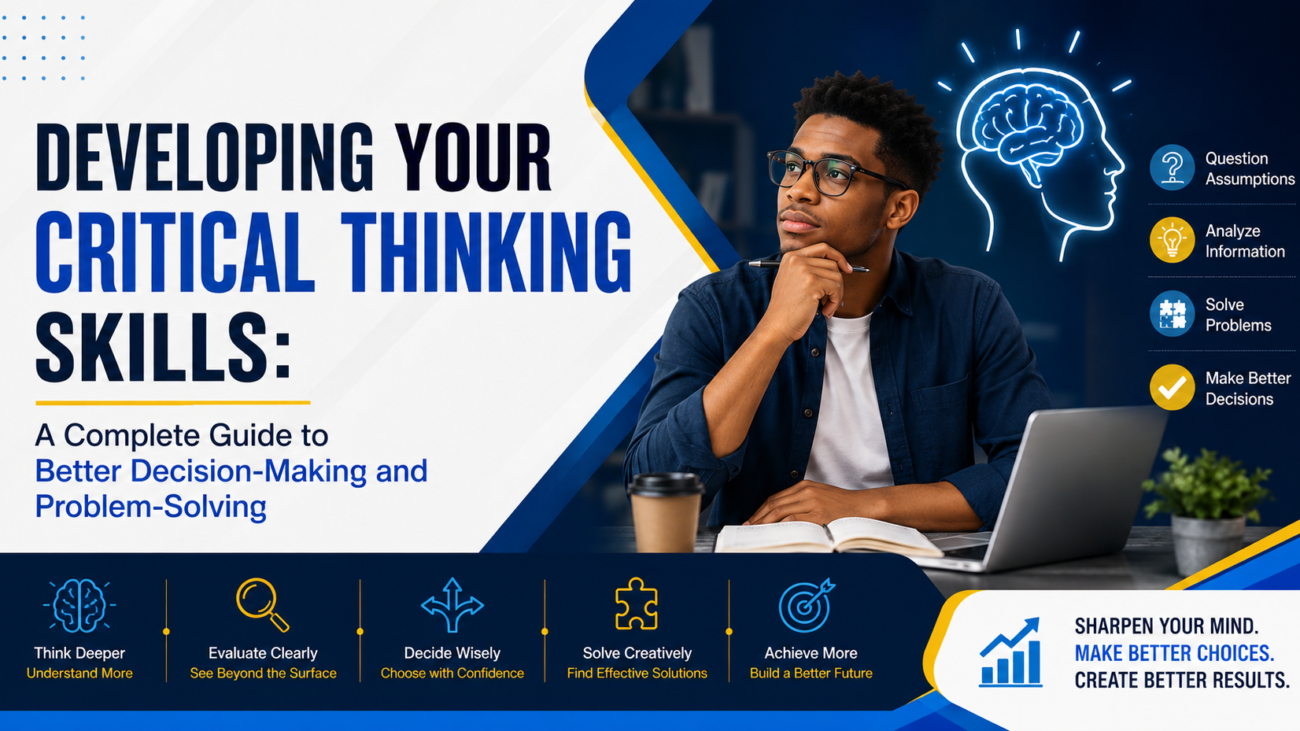
Developing Your Critical Thinking Skills: A Complete Guide to Better Decision-Making and Problem-Solving

Introduction

In today’s fast-paced world, information is everywhere. Every day, people are exposed to news, opinions, advertisements, social media posts, and countless decisions that require careful judgment. The ability to think critically has become one of the most valuable skills for students, professionals, entrepreneurs, and leaders.

Critical thinking is more than simply being intelligent or knowledgeable. It is the ability to analyze information objectively, evaluate evidence, question assumptions, and make well-informed decisions. Individuals with strong critical thinking skills are better equipped to solve complex problems, communicate effectively, avoid costly mistakes, and succeed in both their personal and professional lives.

This guide explores what critical thinking is, why it matters, and practical strategies you can use to strengthen your critical thinking skills every day.


What Is Critical Thinking?

Critical thinking is the process of carefully analyzing information before accepting it as true or making decisions based on it. It involves logical reasoning, curiosity, evidence-based evaluation, and open-mindedness.

Critical thinkers do not accept claims simply because they are popular or come from authority figures. Instead, they ask questions, seek evidence, consider multiple perspectives, and arrive at reasoned conclusions.

Critical thinking combines several important skills, including:

  • Observation
  • Analysis
  • Logical reasoning
  • Interpretation
  • Problem-solving
  • Decision-making
  • Reflection
  • Communication

These skills work together to help individuals make better judgments in all areas of life.


Why Critical Thinking Is Important

Developing strong critical thinking skills offers numerous benefits.

Better Decision-Making

Critical thinkers evaluate facts before making choices. This reduces emotional decision-making and leads to better outcomes.

Improved Problem-Solving

Complex problems often require creative and logical solutions. Critical thinking helps identify the root causes of problems instead of treating symptoms.

Stronger Communication

People who think critically present clear arguments supported by evidence, making them more persuasive and effective communicators.

Greater Independence

Critical thinkers rely on evidence and reasoning rather than blindly following popular opinions or misinformation.

Career Success

Employers value employees who can analyze situations, solve problems, and make informed decisions independently.


Characteristics of a Critical Thinker

Successful critical thinkers often demonstrate the following qualities:

  • Curiosity
  • Open-mindedness
  • Intellectual humility
  • Logical reasoning
  • Fairness
  • Patience
  • Self-discipline
  • Willingness to change opinions when evidence changes
  • Strong observation skills
  • Respect for facts over assumptions

These characteristics help people navigate uncertainty and make thoughtful decisions.


The Critical Thinking Process

Critical thinking follows a structured process.

Step 1: Identify the Problem

Clearly define the issue or decision that needs attention.

Ask yourself:

  • What exactly is the problem?
  • Why does it matter?
  • What outcome am I trying to achieve?

A clearly defined problem is easier to solve.


Step 2: Gather Information

Collect reliable and relevant information from multiple credible sources.

Consider:

  • Research
  • Statistics
  • Expert opinions
  • Personal observations
  • Customer feedback
  • Historical data

Avoid relying on a single source whenever possible.


Step 3: Analyze the Evidence

Examine the quality and reliability of the information.

Ask questions such as:

  • Is this information supported by evidence?
  • Is the source trustworthy?
  • Are there biases?
  • What information might be missing?

Strong conclusions require strong evidence.


Step 4: Consider Different Perspectives

Effective critical thinkers explore alternative viewpoints before making decisions.

Ask:

  • What would someone who disagrees say?
  • Are there other possible explanations?
  • What assumptions am I making?

Considering multiple perspectives leads to more balanced conclusions.


Step 5: Evaluate Possible Solutions

List potential solutions and compare their advantages and disadvantages.

Think about:

  • Costs
  • Risks
  • Benefits
  • Long-term consequences
  • Practicality

Choose the option that provides the greatest overall value.


Step 6: Make a Decision

After careful evaluation, make the best decision based on the available evidence.

Remember that no decision is perfect. The goal is to make the most informed choice possible.


Step 7: Reflect on the Results

After implementing your decision, evaluate the outcome.

Ask yourself:

  • Did the solution work?
  • What could have been improved?
  • What lessons did I learn?

Reflection strengthens future decision-making.


Common Barriers to Critical Thinking

Many factors can interfere with objective thinking.

Confirmation Bias

People naturally seek information that supports what they already believe while ignoring evidence that contradicts it.

Emotional Decision-Making

Strong emotions such as fear, anger, or excitement can cloud judgment.

Peer Pressure

Following the crowd without independent analysis can lead to poor decisions.

Overconfidence

Believing you already know enough may prevent you from seeking additional information.

Lack of Information

Incomplete or inaccurate data often leads to weak conclusions.

Recognizing these barriers is the first step toward overcoming them.


Practical Ways to Improve Critical Thinking Skills

Developing critical thinking is a lifelong process. Here are practical ways to strengthen it.

Ask Better Questions

Instead of accepting information at face value, ask:

  • Why?
  • How?
  • What evidence supports this?
  • Is there another explanation?
  • What assumptions are being made?

Good questions lead to better understanding.


Read Widely

Expose yourself to different viewpoints by reading:

  • Books
  • Academic articles
  • Industry reports
  • Reputable news sources
  • Biographies
  • Research papers

Reading broadly expands your perspective.


Practice Active Listening

Listen carefully before responding.

Focus on understanding rather than preparing your reply.

Good listeners often become better thinkers.


Solve Complex Problems

Challenge yourself with activities such as:

  • Business case studies
  • Strategy games
  • Chess
  • Puzzles
  • Brain teasers
  • Data analysis
  • Real-world projects

These activities improve logical reasoning.


Learn to Recognize Bias

Everyone has biases.

Ask yourself:

  • Am I being objective?
  • Am I ignoring conflicting evidence?
  • Am I making assumptions without proof?

Awareness helps reduce biased thinking.


Keep a Decision Journal

Record important decisions along with:

  • The information available
  • Your reasoning
  • Expected outcomes
  • Actual results

Reviewing past decisions helps improve future judgment.


Discuss Ideas with Others

Constructive discussions expose you to new perspectives and challenge your thinking.

Respectful debate often leads to deeper understanding.


Critical Thinking in the Workplace

Employers highly value critical thinking because it improves performance across many roles.

Professionals use critical thinking to:

  • Solve customer problems
  • Improve business processes
  • Analyze financial data
  • Manage projects
  • Resolve workplace conflicts
  • Evaluate risks
  • Make strategic decisions
  • Lead teams effectively

Organizations with strong critical thinkers are often more innovative and adaptable.


Critical Thinking for Students

Students can strengthen critical thinking by:

  • Asking questions in class
  • Evaluating sources before citing them
  • Participating in debates
  • Conducting research
  • Solving real-life case studies
  • Reflecting on feedback
  • Writing analytical essays

Critical thinking improves academic performance and prepares students for future careers.


Critical Thinking for Entrepreneurs

Entrepreneurs face uncertainty every day.

Critical thinking helps business owners:

  • Identify market opportunities
  • Evaluate business risks
  • Understand customer needs
  • Analyze competitors
  • Manage finances
  • Develop marketing strategies
  • Make investment decisions
  • Adapt to changing markets

Strong critical thinking often distinguishes successful entrepreneurs from those who struggle.


Daily Habits That Strengthen Critical Thinking

Develop these habits consistently:

  • Read something educational every day.
  • Question assumptions respectfully.
  • Verify facts before sharing information.
  • Reflect on your decisions.
  • Welcome constructive criticism.
  • Stay curious.
  • Learn from mistakes.
  • Seek evidence before forming conclusions.
  • Practice patience when solving problems.
  • Keep an open mind.

Small daily improvements can lead to significant long-term growth.


Common Mistakes to Avoid

Avoid these habits that weaken critical thinking:

  • Jumping to conclusions
  • Believing everything you read online
  • Ignoring evidence that challenges your views
  • Making decisions based only on emotions
  • Refusing to admit mistakes
  • Following popular opinions without analysis
  • Assuming correlation means causation
  • Rushing important decisions

Recognizing these mistakes makes it easier to avoid them.


Final Thoughts

Critical thinking is one of the most valuable skills you can develop in the modern world. It empowers you to make informed decisions, solve problems effectively, communicate clearly, and navigate complex situations with confidence.

Like any skill, critical thinking improves through consistent practice. By asking thoughtful questions, evaluating evidence carefully, considering different perspectives, and reflecting on your experiences, you can strengthen your ability to think independently and make better decisions in every aspect of life.

Whether you’re a student preparing for your future, an entrepreneur growing a business, or a professional advancing your career, investing in your critical thinking skills will provide lasting benefits and help you succeed in an increasingly complex world.

How to Become a Successful Young Entrepreneur

How to Become a Successful Young Entrepreneur

How to Become a Successful Young Entrepreneur: The Ultimate Guide to Building a Thriving Business

Introduction

Young entrepreneurs are transforming industries around the world by turning innovative ideas into successful businesses. With access to technology, online learning, and global markets, there has never been a better time to start a business. However, success is not determined by age—it’s built through discipline, continuous learning, strategic planning, and perseverance.

Whether you’re a student, recent graduate, or young professional dreaming of financial independence, this guide will help you understand the essential steps to becoming a successful young entrepreneur.


What Is a Young Entrepreneur?

A young entrepreneur is someone, typically between the ages of 16 and 35, who identifies opportunities, creates innovative solutions, and builds a business around them. They are willing to take calculated risks to create value for customers while generating income and employment.

Many globally recognized business leaders started at a young age, proving that determination and execution matter more than experience alone.


Why Young Entrepreneurs Have an Advantage

Starting early provides several unique benefits:

  • More time to learn from mistakes
  • Greater flexibility and willingness to adapt
  • Strong understanding of modern technology
  • Easier adoption of digital marketing
  • Opportunity to build wealth over many years
  • Higher energy and creativity
  • Ability to develop valuable professional networks early

Young entrepreneurs also tend to identify emerging market trends faster than established companies.


Step 1: Find a Problem Worth Solving

Every successful business solves a problem.

Instead of asking:

“What business should I start?”

Ask:

“What problem can I solve?”

Examples include:

  • Limited access to affordable housing
  • High transportation costs
  • Difficulty finding trusted domestic workers
  • Lack of professional moving services
  • Poor access to online education
  • Agricultural challenges
  • Digital payment solutions
  • Healthcare accessibility

Businesses that solve real problems attract loyal customers.


Step 2: Develop an Entrepreneurial Mindset

Success starts with your mindset.

Successful entrepreneurs are:

  • Disciplined
  • Patient
  • Curious
  • Resilient
  • Solution-oriented
  • Confident but humble
  • Open to learning

Challenges are inevitable. Instead of seeing failure as the end, view it as valuable feedback that helps improve your business.


Step 3: Learn Business Fundamentals

You don’t need an MBA to become successful.

Understand the basics of:

  • Marketing
  • Sales
  • Customer service
  • Accounting
  • Negotiation
  • Leadership
  • Branding
  • Business law
  • Financial management

Read books, take online courses, attend seminars, and learn from experienced entrepreneurs.

Knowledge compounds over time.


Step 4: Write a Simple Business Plan

A business plan gives your idea direction.

Include:

Executive Summary

Describe your business in one paragraph.

Product or Service

Explain what you’re selling.

Target Market

Who are your customers?

Competitors

Who already serves this market?

Marketing Strategy

How will customers find you?

Revenue Model

How will your business make money?

Startup Costs

Estimate your investment needs.

Growth Plan

Where do you want the business to be in one, three, and five years?


Step 5: Start Small

Many entrepreneurs wait for the “perfect moment.”

Successful entrepreneurs start with what they have.

Begin by:

  • Selling online
  • Offering freelance services
  • Starting a small retail business
  • Launching an e-commerce store
  • Providing consulting
  • Testing your product locally

Starting small reduces financial risk while providing valuable market feedback.


Step 6: Build a Strong Personal Brand

People often buy from people before they buy from businesses.

Create a professional presence on platforms such as:

  • LinkedIn
  • Facebook
  • Instagram
  • TikTok
  • X
  • YouTube

Share:

  • Business insights
  • Customer success stories
  • Industry knowledge
  • Behind-the-scenes content
  • Educational posts

Consistency builds credibility and trust.


Step 7: Master Sales

Sales are the lifeblood of every business.

Learn how to:

  • Listen carefully
  • Understand customer needs
  • Build trust
  • Handle objections
  • Close deals professionally
  • Follow up consistently

The best entrepreneurs are excellent communicators.


Step 8: Build Strong Financial Habits

Many businesses fail because of poor financial management.

Good practices include:

  • Separating business and personal finances
  • Keeping accurate records
  • Budgeting carefully
  • Saving for emergencies
  • Reinvesting profits
  • Managing debt responsibly

Always know your:

  • Revenue
  • Expenses
  • Profit margins
  • Cash flow

Cash flow is often more important than profit.


Step 9: Build a Great Team

As your business grows, you cannot do everything yourself.

Hire people who:

  • Share your vision
  • Have complementary skills
  • Are reliable
  • Communicate well
  • Focus on customer satisfaction

Great businesses are built by great teams.


Step 10: Embrace Technology

Technology increases efficiency and expands your reach.

Use tools for:

  • Accounting
  • Customer relationship management (CRM)
  • Project management
  • Email marketing
  • Graphic design
  • Social media scheduling
  • Video conferencing
  • E-commerce

Automation saves time and improves productivity.


Step 11: Network with Successful People

Your network influences your opportunities.

Attend:

  • Business conferences
  • Networking events
  • Industry workshops
  • Entrepreneurship forums
  • Startup competitions

Build genuine relationships rather than simply collecting business cards.

Mentors can help you avoid costly mistakes.


Step 12: Learn Digital Marketing

Modern businesses grow online.

Focus on:

Search Engine Optimization (SEO)

Help your website rank higher on search engines.

Social Media Marketing

Build brand awareness and engage with customers.

Email Marketing

Stay connected with existing customers.

Paid Advertising

Reach targeted audiences through online ads.

Content Marketing

Publish valuable articles, videos, and guides that answer customer questions.

Digital marketing provides measurable and scalable growth opportunities.


Step 13: Deliver Outstanding Customer Service

Happy customers become repeat customers.

Provide:

  • Fast responses
  • Honest communication
  • Quality products
  • Reliable service
  • Professional support
  • Prompt issue resolution

Excellent customer service generates referrals and strengthens your reputation.


Step 14: Never Stop Learning

Markets change constantly.

Successful entrepreneurs invest in continuous learning by:

  • Reading books
  • Listening to podcasts
  • Watching educational videos
  • Attending workshops
  • Studying competitors
  • Following industry trends

The more you learn, the more valuable your business becomes.


Common Mistakes Young Entrepreneurs Should Avoid

Avoid these common pitfalls:

  • Waiting too long to start
  • Ignoring customer feedback
  • Poor financial management
  • Trying to do everything alone
  • Copying competitors without innovation
  • Giving up after early setbacks
  • Overspending on unnecessary expenses
  • Neglecting marketing
  • Failing to build systems
  • Lack of consistency

Every mistake is an opportunity to improve if addressed quickly.


Business Ideas for Young Entrepreneurs

Consider these promising opportunities:

  • Real estate agency
  • Property management
  • Digital marketing agency
  • Graphic design studio
  • Web development
  • Mobile app development
  • E-commerce store
  • Delivery services
  • Event planning
  • Photography and videography
  • Construction services
  • Cleaning services
  • Tourism and travel
  • Agribusiness
  • Online education
  • Logistics and transportation
  • Professional moving services
  • Interior design
  • Furniture business
  • Renewable energy solutions

Choose an idea that aligns with your interests, skills, and local market demand.


Habits of Highly Successful Entrepreneurs

Successful business owners consistently:

  • Wake up with clear goals
  • Plan their day
  • Read regularly
  • Exercise
  • Build meaningful relationships
  • Track business performance
  • Invest in personal development
  • Stay organized
  • Adapt to change
  • Focus on long-term growth

Daily habits often determine long-term success.


Final Thoughts

Becoming a successful young entrepreneur is a journey, not an overnight achievement. Every thriving business begins with a simple idea, followed by consistent effort, smart decisions, and a willingness to learn from challenges.

Success comes from solving real problems, creating value for customers, managing your finances wisely, embracing innovation, and continuously improving yourself. While obstacles are inevitable, persistence and adaptability are what separate successful entrepreneurs from those who give up.

Start where you are, use the resources available to you, and take action today. Every step you take brings you closer to building a business that creates impact, generates wealth, and leaves a lasting legacy.


Frequently Asked Questions (FAQs)

What is the best age to start a business?

There is no perfect age. Many successful entrepreneurs start in their late teens or early twenties, while others begin later in life. The best time to start is when you have a viable idea and are ready to commit to learning and taking action.

Do I need a lot of money to start a business?

No. Many businesses begin with minimal capital by offering services, selling online, or starting from home. Focus on solving a problem and reinvest profits as you grow.

What qualities make a successful entrepreneur?

Successful entrepreneurs are disciplined, resilient, adaptable, customer-focused, willing to learn, and capable of making informed decisions under uncertainty.

How can I finance my first business?

Common options include personal savings, support from family or friends, business partners, grants, competitions, crowdfunding, angel investors, or small business loans.

Which industries offer the best opportunities for young entrepreneurs?

Technology, real estate, agribusiness, digital marketing, e-commerce, renewable energy, logistics, education, healthcare services, and creative industries all present strong growth potential, depending on your market and expertise.

fff

In a professional context it often happens

When, while the lovely valley teems with vapor around me, and the meridian sun strikes the upper surface of the impenetrable foliage of my trees, and but a few stray gleams steal into the inner sanctuary, I throw myself down among the tall grass by the trickling stream; and, as I lie close to the earth, a thousand unknown plants are noticed by me: when I hear the buzz of the little world among the stalks, and grow familiar with the countless indescribable forms of the insects and flies, then I feel the presence of the Almighty, who formed us in his own image, and the breath of that universal love which bears and sustains us, as it floats around us in an eternity of bliss; and then, my friend, when darkness overspreads my eyes, and heaven and earth seem to dwell in my soul and absorb its power, like the form of a beloved mistress, then I often think with longing, Oh, would I could describe these conceptions, could impress upon paper all that is living so full and warm within me, that it might be the mirror of my soul, as my soul is the mirror of the infinite God!

O my friend — but it is too much for my strength — I sink under the weight of the splendor of these visions! A wonderful serenity has taken possession of my entire soul, like these sweet mornings of spring which I enjoy with my whole heart. I am alone, and feel the charm of existence in this spot, which was created for the bliss of souls like mine.

I am so happy, my dear friend, so absorbed in the exquisite sense of mere tranquil existence, that I neglect my talents. I should be incapable of drawing a single stroke at the present moment; and yet I feel that I never was a greater artist than now.

When, while the lovely valley teems with vapor around me, and the meridian sun strikes the upper surface of the impenetrable foliage of my trees, and but a few stray gleams steal into the inner sanctuary, I throw myself down among the tall grass by the trickling stream; and, as I lie close to the earth, a thousand unknown plants are noticed by me: when I hear the buzz of the little world among the stalks, and grow familiar with the countless indescribable forms of the insects and flies, then I feel the presence of the Almighty, who formed us in his own image, and the breath of that universal love which bears and sustains us, as it floats around us in an eternity of bliss; and then, my friend, when darkness overspreads my eyes, and heaven and earth seem to dwell in my soul and absorb its power, like the form of a beloved mistress, then I often think with longing, Oh, would I could describe these conceptions, could impress upon paper all that is living so full and warm within me.